Restaurant marketing in 2025 is more sophisticated than it has ever been. Multi-unit operators run geo-targeted paid campaigns, build local SEO footprints across dozens of Google Business Profiles, partner with food influencers, and invest in reservation platform visibility. For most chains, attracting attention is no longer the hard part.
The hard part is what happens after the attention lands.
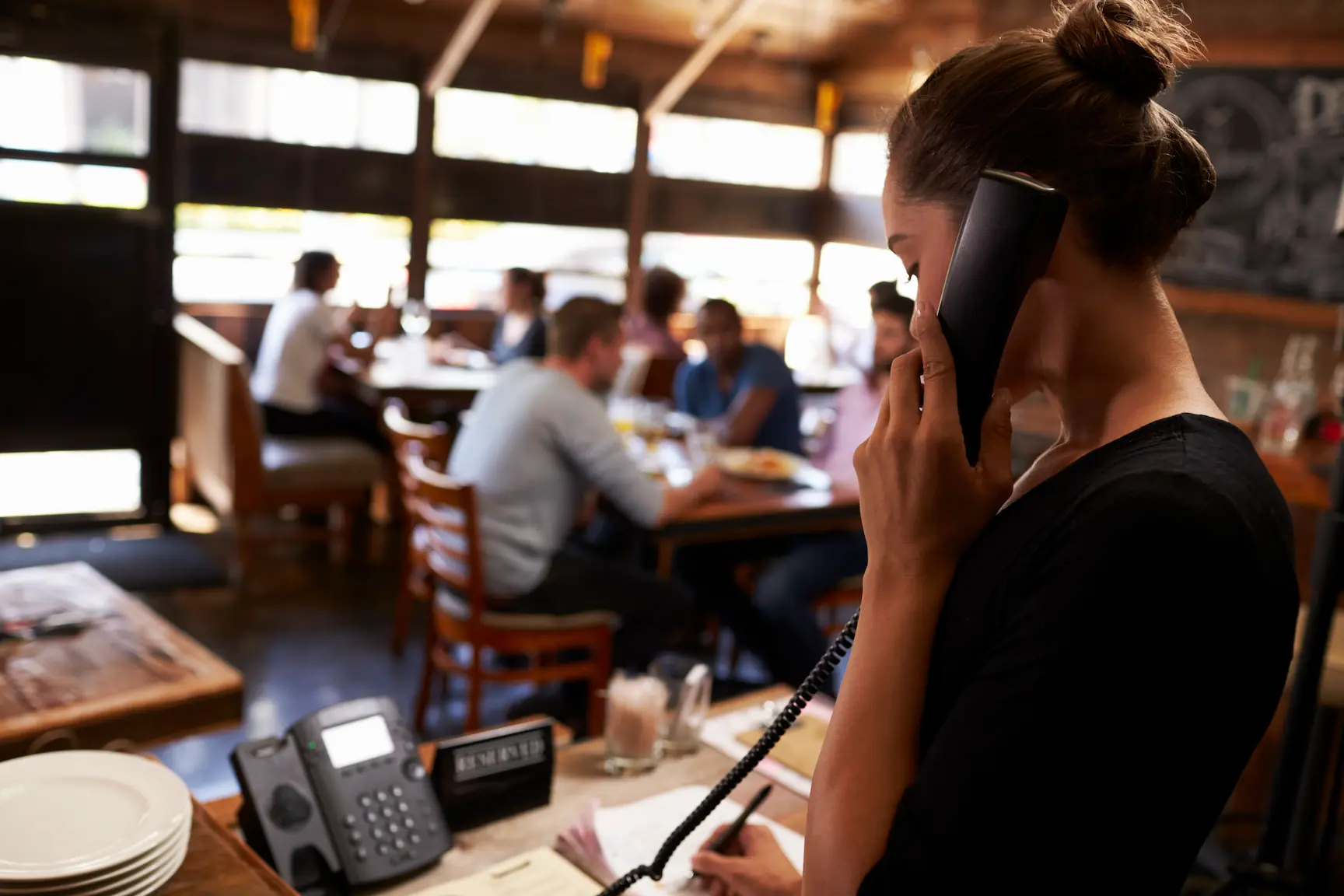
A guest searches for dinner nearby, finds your profile, reads the reviews, and taps "Call." Your host is seating a walk-in. Your manager is on the floor. After 40 seconds of ringing, the guest hangs up and calls the restaurant down the street. That customer was already won by your marketing. You just lost them at the only moment that mattered.
This is the conversion gap hiding inside most restaurant marketing funnels — and it costs more than operators realize.
Why Restaurant Marketing ROI Disappears at the Phone
Every dollar spent on digital marketing — Google Ads, Local SEO, Instagram campaigns, third-party reservation platforms — is ultimately paying for one outcome: a guest who decides to engage with your restaurant. For a significant share of full-service, casual, and fine dining concepts, that engagement still happens over the phone.
Calls carry the highest intent of any inbound channel. A guest calling your restaurant has already done the research, already chosen you, and wants to take immediate action — book a table, place a takeout order, ask about a large-party event, confirm hours. They are not browsing. They are converting.
Or they would be, if someone answered.
Industry data consistently documents the gap. Popmenu's State of the Restaurant Phone report found that restaurants without a dedicated phone system average a 60–70% answer rate. HungerRush estimates that 30–40% of inbound calls go unanswered during peak periods. According to Hiya's State of the Call Report, 62% of callers who reach voicemail never leave a message — they simply disappear.
For restaurant operators, those lost calls are functionally invisible. They don't appear in the POS. They don't fire a CRM alert. They don't show up in the weekly reporting deck. But they represent revenue that your restaurant marketing already paid to generate and never captured.
The Operational Reality That Creates the Gap
Understanding why this happens requires an honest look at front-of-house operations at peak.
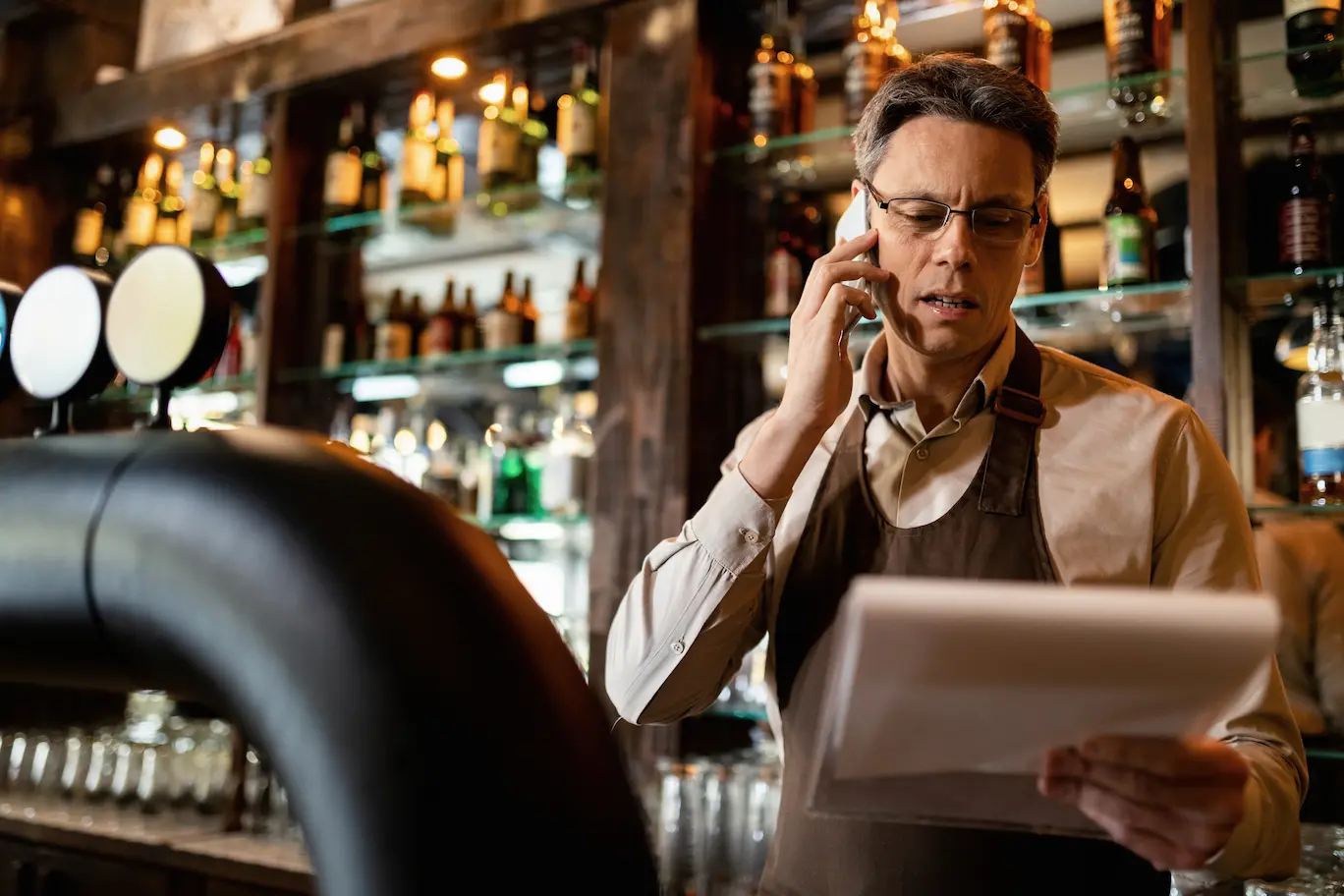
A host at a 150-cover restaurant on a Friday night is simultaneously greeting walk-ins, managing a reservation waitlist, answering questions from guests in the lobby, and coordinating with the floor team on table turns. The phone rings. The host is mid-sentence with a guest who just walked in the door. The call rings out.
This is not a training failure. It is a structural one. The phone was designed as one of many tools a single employee was expected to manage. As restaurant marketing has grown more effective at driving inbound demand, that assumption has become unsustainable.
Toast's labor benchmarks have found that hosts and managers spend up to 20–35% of their peak-hour shifts on phone interactions. That is time taken directly away from in-restaurant guest experience — the experience that drives the reviews that make your restaurant marketing work in the first place.
The math compounds quickly. If your marketing generates 80 inbound calls on a Saturday and your team answers 55, you are leaving 25 high-intent conversion opportunities unanswered. At an average reservation value of $60 per cover and an average party size of 2.5, each missed reservation call represents roughly $150 in revenue that your campaign already paid to attract.
Multiply that across a 12-location chain running weekend campaigns, and the invisible revenue leak becomes very visible.
How Missed Calls Damage Your Local SEO — and Your Marketing Cycle
Operators who treat phone handling as a purely operational problem are missing a second layer of damage: the feedback loop that missed calls create inside local search.
Google's local ranking algorithm increasingly rewards consistent, positive guest experiences. When potential guests repeatedly encounter unanswered calls, long hold times, or conflicting information across locations, their frustration surfaces publicly. Reviews that say "impossible to reach by phone," "called three times and no one answered," or "had to go somewhere else because they never picked up" are not just bad for reputation — they are direct signals to Google that the business is not meeting demand reliably.
Over time, those signals erode the local search rankings that your restaurant marketing is built on. You spend to rank. Ranking drives calls. Missed calls generate bad reviews. Bad reviews weaken ranking. The cycle punishes growth.
For multi-unit brands managing restaurant marketing across multiple Google Business Profiles, the problem is compounded by inconsistency. Different location managers handle calls differently. Scripts vary. Hours are stated differently. Specials are communicated differently. A guest who calls two locations of the same brand and receives two different answers has already lost confidence in the brand.
What a Restaurant Answering Service Built for Chains Actually Does
This is the problem RestoHost AI was engineered to solve — not as a generic restaurant answering service, but as a fully-managed AI voice agent built specifically for multi-unit restaurant operations.
RestoHost was built inside RReal Tacos, a 12-location chain that was the first proving ground. Before deployment, RReal Tacos was answering approximately 58% of inbound calls. After going live with RestoHost, that number reached 100% — across all 12 locations, simultaneously, 24 hours a day. Over six months, the system handled 138,000 calls, recovered 53,900 calls that would previously have been missed, and contributed to a $110,000 monthly revenue increase chain-wide. At peak, it managed 78 simultaneous calls — a volume no host stand could ever absorb.
The results have replicated across brands at different scales and service levels:
Baires Grill (8 locations): 26,000+ calls answered over six months. 82% resolved by the AI without staff involvement. 10,700+ reservation calls handled directly. Zero voicemails recorded during business hours.
KYU (Miami + NYC): 10,000 calls answered with a 98.7% AI resolution rate. Average call duration: 50 seconds — compared to a 3–4 minute equivalent with a human host. Zero voicemails.
Mango's: 14,600+ calls answered. 64% AI resolution rate. Average call duration: 60 seconds. Peak of 8 simultaneous calls handled during Friday show rush.
These are not general answering service benchmarks. They are verified figures from named restaurant brands across casual, upscale, fine dining, and eatertainment categories.
What makes RestoHost function differently from a traditional restaurant answering service is specificity. Each deployment trains the AI on that restaurant's menu, reservation system, hours, brand voice, and operational policies. It handles reservations, takeout, delivery, catering inquiries, and general FAQ — in English and Spanish natively, with additional languages available as an add-on. It sends SMS links for reservation confirmation, online ordering, and menus. When a call genuinely requires a human, smart staff transfer routes it to the right person or extension.
The result for restaurant voice assistant purposes is a front-of-house that is always on, always consistent, and never busy.
What Phone Performance Visibility Does for Restaurant Marketing Strategy
There is a less obvious benefit that operators at growing chains increasingly cite: the data.
Most restaurants have almost no visibility into phone performance. They know how many covers they seated. They know how many online orders came through. They do not know how many calls they missed last Saturday between 7:00 and 8:30 PM, what those callers wanted, or how many of them tried again.
RestoHost's monthly call analytics reports change that. Volume by hour, peak concurrent demand, top inquiry categories, resolution rates, after-hours call patterns — all of it becomes measurable. For a Director of Operations or COO managing 10 to 25 locations, that data is not just operational insight. It is marketing intelligence.
If your analytics show that 40% of after-hours calls are reservation inquiries, you know your marketing is driving demand that your current hours cannot capture. If one location is receiving three times the catering inquiry volume of comparable locations, that is a signal about local demand that your marketing strategy should respond to.
Phone data, when it exists, becomes part of how smart operators make restaurant marketing decisions — not just how they staff the host stand.
Checklist: Signs Your Restaurant Marketing Is Losing Revenue at the Phone
Before investing another dollar in top-of-funnel restaurant marketing, run through this list:
- ☐ Guests mention unanswered calls in Google or Yelp reviews
- ☐ Peak-hour calls regularly reach voicemail
- ☐ Hosts spend more than 20% of a shift on phone management
- ☐ Reservation demand is higher than confirmed bookings suggest it should be
- ☐ After-hours inquiries go unanswered and untracked
- ☐ Marketing campaigns increase call volume without a proportional increase in reservations
- ☐ Different locations provide inconsistent answers about hours, policies, or availability
- ☐ You have no data on how many inbound calls went unanswered last month
If three or more of those apply, phone handling is actively suppressing the return on your restaurant marketing investment.
Frequently Asked Questions
Why is phone handling considered part of restaurant marketing? Because the marketing funnel doesn't end when a customer finds your restaurant — it ends when they successfully complete an action like booking a reservation or placing an order. For most full-service and fine dining concepts, the phone is still the primary conversion point between discovery and revenue. Missed calls mean your marketing generated demand that was never captured.
How do unanswered calls affect Local SEO? When guests consistently can't reach a restaurant by phone, the frustration tends to appear in reviews — comments like "no one ever answers" or "had to call three times." Those reviews weaken your Google Business Profile's perceived quality and, over time, erode the local search rankings that your restaurant marketing depends on to generate new guests.
What makes an AI voice agent different from a standard restaurant answering service? A traditional answering service uses scripted menus or off-site agents with limited knowledge of your restaurant. An AI voice agent for restaurants like RestoHost is trained specifically on your menu, reservation system, hours, policies, and brand voice — and handles the full conversation, from reservation booking to catering intake to FAQ, without requiring a human handoff in the majority of cases.
How quickly can a restaurant deploy RestoHost? RestoHost's white-glove onboarding takes 14 days from contract to go-live. The process includes a deep-dive training phase on your operations, a testing sprint covering hundreds of scenarios, and a fine-tuning period after launch. Client time investment is approximately 1–2 hours per month post-launch.
Does RestoHost work for multi-location chains? It is purpose-built for them. The system standardizes phone responses across every location while preserving each restaurant's individual menu details and operational rules. Chains like RReal Tacos (12 locations), Baires Grill (8 locations), and KYU (multiple markets) are active clients, with verified answer rates reaching 100% chain-wide.
Closing
Restaurant marketing generates demand. The only question is whether your operation is equipped to capture it.
The phone remains the highest-intent touchpoint in hospitality — the moment a guest stops browsing and starts converting. When that moment is met with a busy signal, a voicemail, or a ring that goes unanswered, the investment made to reach that guest produces nothing. Improving phone responsiveness is not an operational detail. It is restaurant marketing strategy at the conversion layer, and it is where the difference between a 58% answer rate and a 100% answer rate translates directly into recoverable revenue.
If your restaurant marketing is working but your reservations and order volume are not reflecting it, the phone is the first place to look.