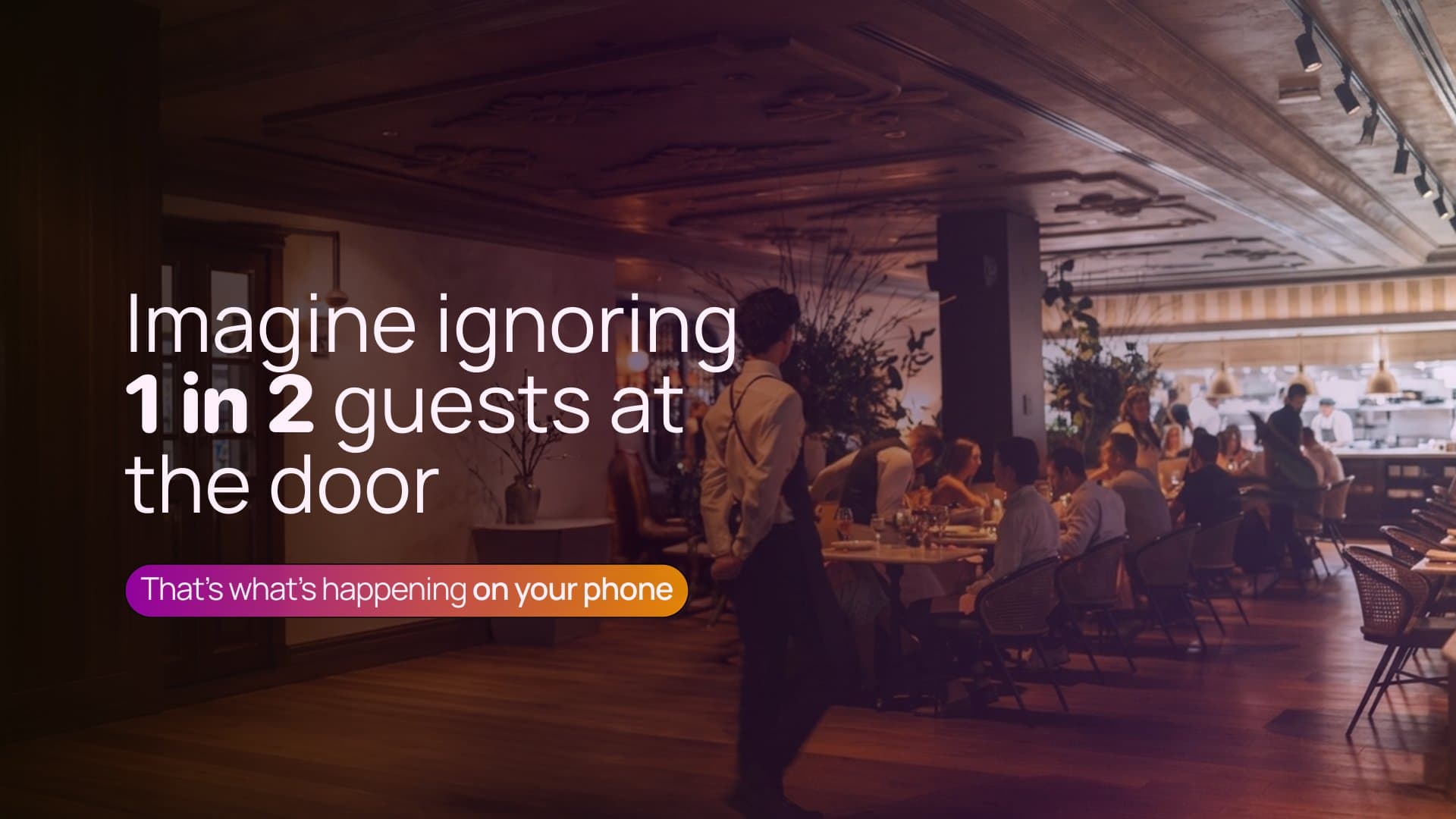
On Cinco de Mayo, most restaurants are not trying to get more customers. They’re trying to keep up with the ones already reaching out.
That’s where the real problem starts.
Demand spikes, decisions happen fast, and a large part of that demand comes through the phone. Guests call to book, check wait times, or place orders with clear intent to convert. If the call isn’t answered, they don’t wait. They move on.
High Demand Doesn’t Guarantee High Revenue
The numbers confirm how intense this moment is. Restaurant spending increases by 40% year over year for Cinco de Mayo according to SpotOn, while Womply reports a 44% lift versus an average day. Mexican QSR brands have seen growth between 25% and 88%, and around 59% of Americans actively choose Mexican food.
This is not a demand problem. It’s a demand handling problem.
When a customer calls, they expect an immediate response. After 30 seconds, abandonment rises sharply. After one minute, most callers drop and the majority never leave a voicemail. On a night like this, that behavior translates directly into lost reservations, missed covers, and orders that go elsewhere.
Where Restaurants Actually Break: Simultaneous Calls
The pressure point is not how many calls come in, but how they come in.
Cinco de Mayo compresses demand into short windows where multiple guests try to reach the restaurant at the same time. In one multi-location concept, call volume reached five times the daily average, concentrating nearly a quarter of monthly calls into a single day.
Most restaurants are not built for that. The typical setup is still one host, one line, handling calls sequentially while also running the floor. When several calls hit at once, capacity collapses. Some calls get answered, most don’t, and the lost ones rarely come back.
This is where revenue starts to leak.
The Demand You Lose Before Service Even Starts
Not all demand happens during service. A meaningful share of guests plan ahead, calling late at night or early in the morning in the days leading up to Cinco de Mayo.
If no one answers, those reservations and orders are secured somewhere else before your shift even begins.
At that point, the issue is no longer staffing. It’s coverage.
What makes the difference is having a clear call handling system in place. That means a structured way to receive, manage, and resolve inbound calls as they come in, even when demand peaks and multiple customers reach out at the same time. Without that structure, calls pile up, responses slow down, and interactions get lost in the middle of service. With it, the phone becomes a reliable part of the revenue flow.
What Actually Drives Performance on Nights Like This
Revenue alone doesn’t show the full picture. It only reflects what was captured.
To understand performance, restaurants need to look at inbound call volume, answer rate, missed calls, and response time. These metrics reveal how much demand is being lost during peak windows, when every second matters and every missed interaction has immediate impact.
Shorter, faster interactions also play a role. The quicker a call is resolved, the more guests can be handled within the same timeframe, increasing total throughput during high-pressure service.
How RestoHost Changes the Outcome
RestoHost removes the dependency between inbound demand and staff availability by turning calls into a structured, always-on system.
Instead of relying on a host to answer between tasks, calls are handled in parallel, so multiple guests can be attended at the same time without overflow. There is no queue building up and no need for customers to wait for the line to free up.
This becomes critical on Cinco de Mayo, where timing defines conversion. Calls that would otherwise be missed are captured and resolved in real time, whether they come during peak service or outside operating hours.
The result is straightforward: more reservations confirmed, more orders completed, and fewer high-intent customers lost to competitors.
Checklist: Preparing for Cinco de Mayo Demand
□ Define how inbound calls will be handled during peak service□ Ensure phone coverage does not depend on a single host or line□ Standardize key information (hours, wait times, availability)□ Identify when missed calls are happening□ Track inbound call volume, answer rate, and response time□ Reduce call duration to increase throughput□ Implement a system that can handle simultaneous calls
Frequently Asked Questions
Q: Why do restaurants miss so many calls on Cinco de Mayo?A: Because calls don’t come in evenly. On Cinco de Mayo, multiple customers call at the same time, and most restaurants rely on a one-line, one-host setup that can’t handle simultaneous demand.
Q: How do missed calls affect restaurant revenue?A: Missed calls are high-intent customers who were ready to book a table or place an order. When they don’t get an answer, they usually contact another restaurant, resulting in lost reservations and lost orders.
Q: What is a call handling system for restaurants?A: It is a structured way to receive, manage, and resolve inbound calls as they happen, even during peak demand. It ensures that calls don’t pile up or get lost when multiple customers reach out at the same time.
Q: What metrics should restaurants track to reduce missed calls?A: Restaurants should track inbound call volume, answer rate, missed calls, and response time. These metrics show how effectively demand is being handled, especially during peak service.
Q: How can restaurants handle high call volume on Cinco de Mayo?A: They need a system that can handle multiple calls at the same time, instead of relying on a single host or phone line. This allows them to capture demand during peak moments instead of losing it.
Q: How does RestoHost help reduce missed calls in restaurants?A: RestoHost handles inbound calls in parallel, captures after-hours demand, and ensures every customer interaction is answered and resolved, even during high-demand moments like Cinco de Mayo.
Conclusion
Cinco de Mayo doesn’t just increase demand. It exposes how well a restaurant can handle it.
When multiple guests reach out at the same time, the phone becomes either a bottleneck or a revenue channel. The difference is whether there is a system in place to capture that demand as it happens.
“Performance on peak days comes down to how much demand you capture when it happens.” — Lucas Espina, CEO & Founder at RestoHost
This is general guidance; validate with a professional based on your operation.
Want to capture more demand on your busiest nights? Contact RestoHost for a demo.